Luz De Luna Gallery, The Hague
21 January – 18 March 2023
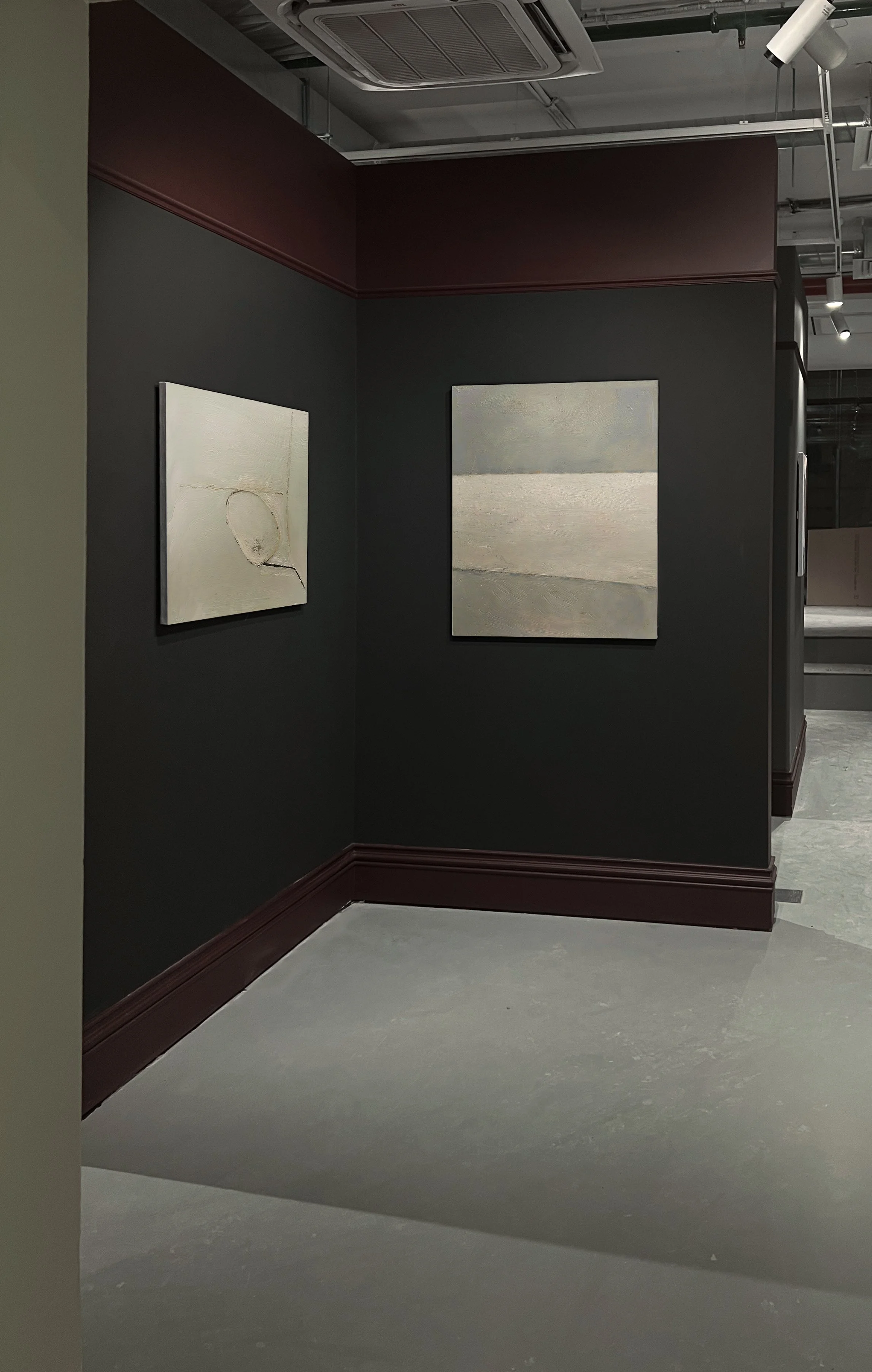
The Visible Bows to the Unseen presented a cycle of new paintings by Zibeyda Seyidova, exploring abstraction as a space where visibility yields to what cannot be represented. Drawing on Islamic metaphysical thought and the legacies of post-war abstraction, the exhibition approached painting as a site of submission—where unity is not depicted but encountered through restraint, stillness, and attentiveness.
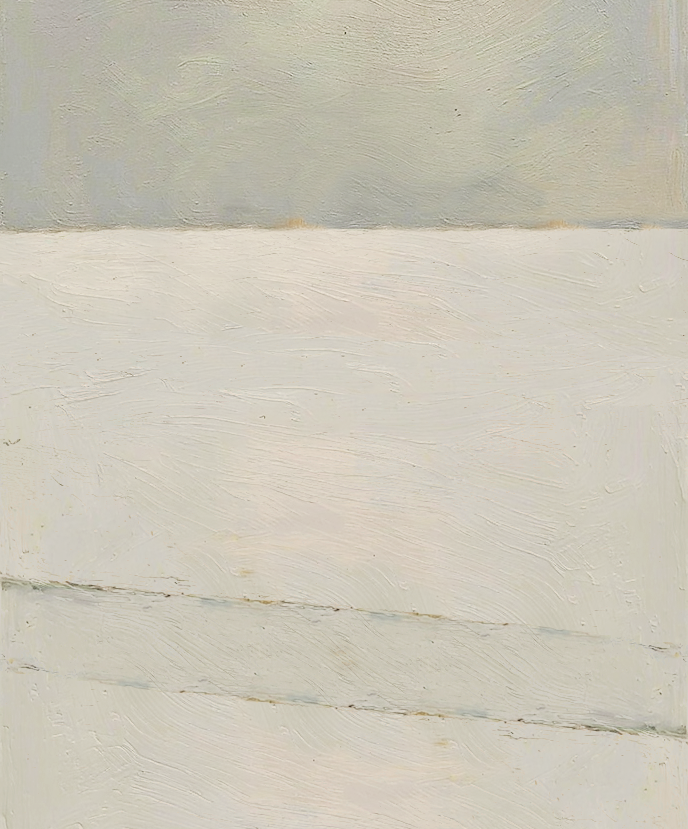
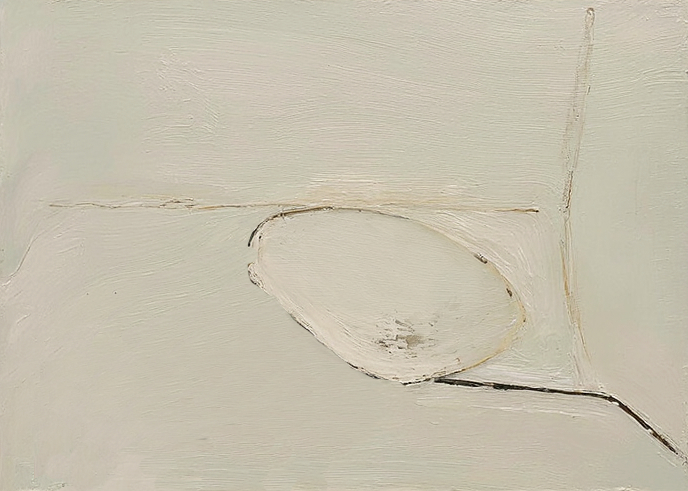
Seyidova’s sparse, textured canvases—rendered in muted tones of ivory, pale grey, and earthen hues—operate not as images but as thresholds. Through reduction, they propose painting as a dwelling-space for perception, where fragmented experience is gently drawn toward alignment. These works do not seek harmony or resolution; instead, they embody a quiet submission to tawḥīd, the Islamic principle of divine unity, in which the visible is understood as contingent upon the unseen.
Rather than relying on figuration or allegory, Seyidova stages unity as a perceptual and temporal event. Horizontal divisions, faint diagonals, and subtle lines enact the tension between manifestation (ẓāhir) and concealment (bāṭin). The paintings resist spectacle, unfolding slowly within a rhythm of return and stillness. Unity here is not fixed or complete, but continually approached—a movement of orientation toward what exceeds form.
Material process plays a central role in this inquiry. Working in oil on canvas, Seyidova builds surfaces through layered, reworked paint, allowing traces of gesture to remain visible. Her brushwork is restrained and meditative, emphasizing repetition as intensification rather than excess. Texture functions as a veil, holding the surface between disclosure and withdrawal. Through this disciplined materiality, painting becomes an analogue for invocation, where the act of return deepens rather than resolves meaning.
This language of restraint developed from Seyidova’s earlier exhibition Light Embraces Shadow at Galerie Cinéma in Lyon (2022), where light and darkness were brought into dialogue through layered surfaces. In The Visible Bows to the Unseen, this vocabulary is further distilled. The palette approaches near-silence, and gesture is pared back to its essentials, as if painting itself were performing an act of prostration.
Submission in Seyidova’s work is not passive but deliberate and ethical. Like the physical bowing of prayer, her paintings incline the visible toward the invisible, reminding the viewer that vision is never sovereign. They do not assert themselves, but invite a posture of receptivity—of waiting, remembrance, and humility. Absence becomes active, and silence takes on density.
Within the contemporary field of abstraction, Seyidova’s practice stands apart. While much recent abstraction embraces colour, gesture, and immediacy, her work resists spectacle and affective excess. Though her restraint may recall artists such as Agnes Martin or Kazimir Malevich, Seyidova reorients abstraction through the metaphysical horizon of Islamic aesthetics, grounding reduction in the principle of unity rather than autonomy.
The Visible Bows to the Unseen proposed abstraction not as formal exploration but as spiritual and philosophical encounter. The paintings do not demand attention; they create space for contemplation. Each canvas enacts a quiet turning—of surface toward depth, of matter toward spirit—affirming that the visible is always shaped by what remains unseen.